June 23, 2026
Why I still convert PDFs to Markdown for AI, even as the models get better
Why convert PDFs to Markdown even as AI models improve: documents you can't upload, documents too costly to re-read, and a study showing 79% to 94% accuracy.

Jerome
Builder of pdfmarkdown.app
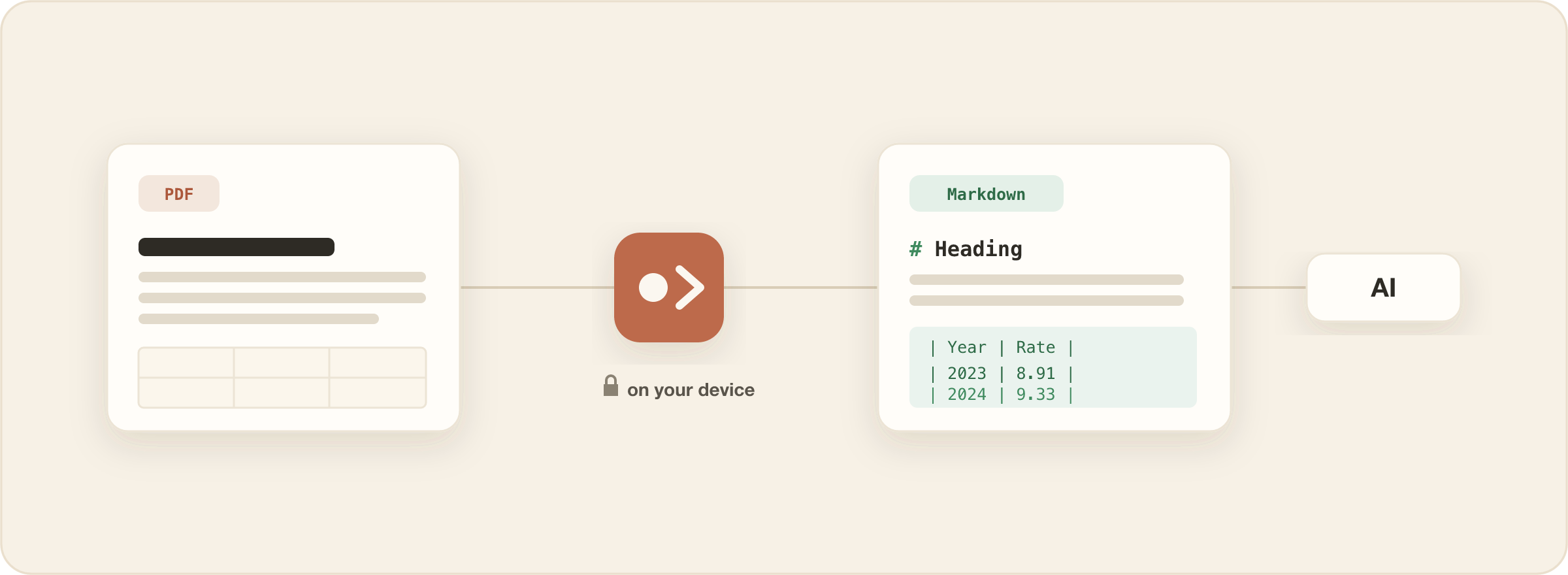
I caught up with a friend last week. He’s building an agent startup. I showed him what I’d been working on, pdfmarkdown.app, an in-browser PDF to Markdown converter.
He asked the obvious question. “Models keep getting better at reading PDFs. In a year they’ll just handle it. Why build a whole tool to convert them?”
I used to think exactly that.
Then I started hearing from the people who actually use this thing. And the model getting smarter doesn’t make the problem go away. It just moves it somewhere the model can’t reach.
”Just paste the PDF in” quietly assumes two things
When someone tells you a good model can read your PDF directly, they’re assuming two things you don’t always have. That you’re allowed to upload it. And that you don’t mind paying to.
Both break more often than you’d think.
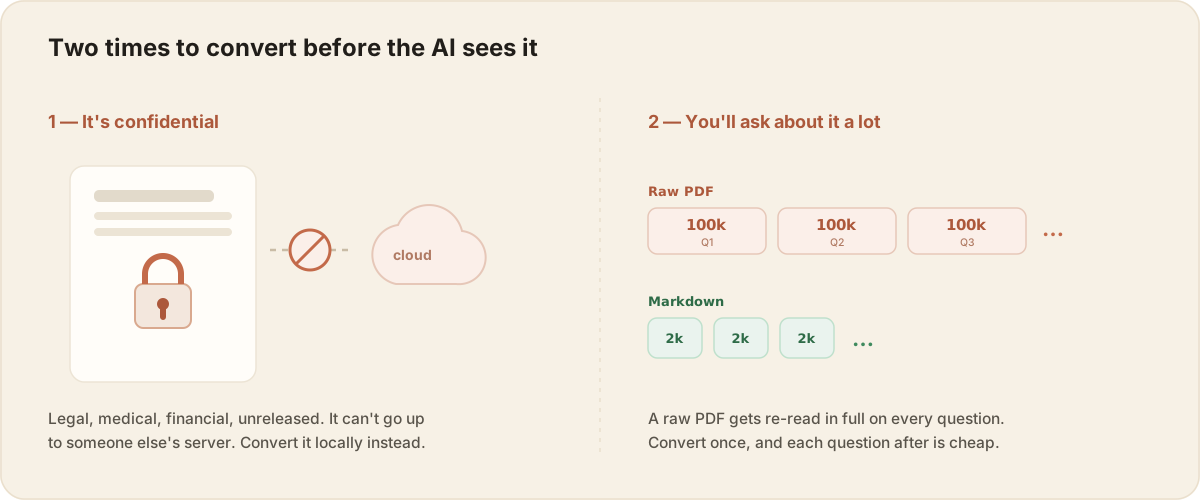
Some documents can’t leave your machine. A lawyer with a client contract. A clinician with patient records. Anyone touching an unreleased filing, a financial draft, an HR file. It doesn’t matter how good the cloud model is. Policy, law, or plain common sense says that file does not go up to someone else’s server. For these people, “use the best model” was never on the table.
And the best model is expensive to re-read. This one I owe to a user who put it better than I could. He was building a machine-learning library and kept asking an AI to check a specific equation in a paper against his code. Reasonable thing to want. Except every single time, loading that one PDF ran past a hundred thousand tokens. He was paying full price to re-ingest the entire document just to ask about one line. After he converted his papers to clean Markdown, his words were basically: now they all fit in context at once.
A PDF makes the model re-read everything, every time. A clean Markdown file is cheap to search and cheap to ask about, for good.
So you deal with the PDF before the model ever sees it
Converting a PDF to Markdown means turning its page layout into plain, structured text a model can read reliably, headings as headings and tables as real rows and columns. That’s the whole move: convert the document once, on your own machine, and two things change.
- The confidential stuff never leaves your device. And if a few lines are sensitive, you can strip them out before anything touches a model, local or cloud.
- The expensive stuff gets cheap. One conversion, and every question after that reads a light text file instead of decoding a PDF from scratch.
It’s a middle step. For a lot of people it’s the only step that makes feeding a PDF to AI tools like ChatGPT, NotebookLM, or an Obsidian vault work at all.
The catch: most ways to do this fail where you can’t see it
Two problems.
The first one hits you the moment you try. Most PDF-to-text tools are built for developers. Python, Docker, a pile of dependencies, an afternoon of fighting your environment before you convert a single page. And forget doing any of it from your phone when you just wanted to read a paper on the couch.
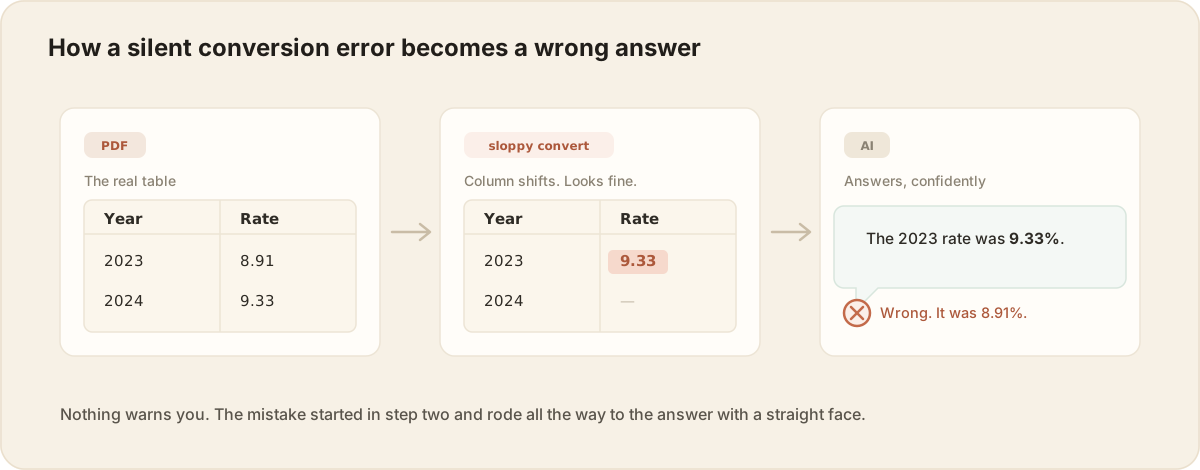
The second problem is the dangerous one, because it’s invisible. The tool converts your PDF, a column in a table quietly shifts, a formula comes out scrambled, and nothing warns you. The output looks clean. You hand it to the AI. The AI answers, confidently, from the broken version. The mistake started three steps back and rode all the way to your answer with a straight face.
So you get a wrong answer, and you blame the model. Is the model dumb? No. It got fed garbage. Garbage in, garbage out, same as it ever was.
Someone finally put numbers on this
For a long time that last part was just my hunch. Then a team at the University of Porto measured it properly, in a paper published in May 2026 (here).
It’s a funny moment to publish a result like this. We’ve got models so strong that people half-seriously want Fable 5 recalled like a hazardous product. And right in the middle of all that, a study fresh off the press points at the dumbest step in the whole chain, turning a PDF into text, and finds that’s still where everything breaks.
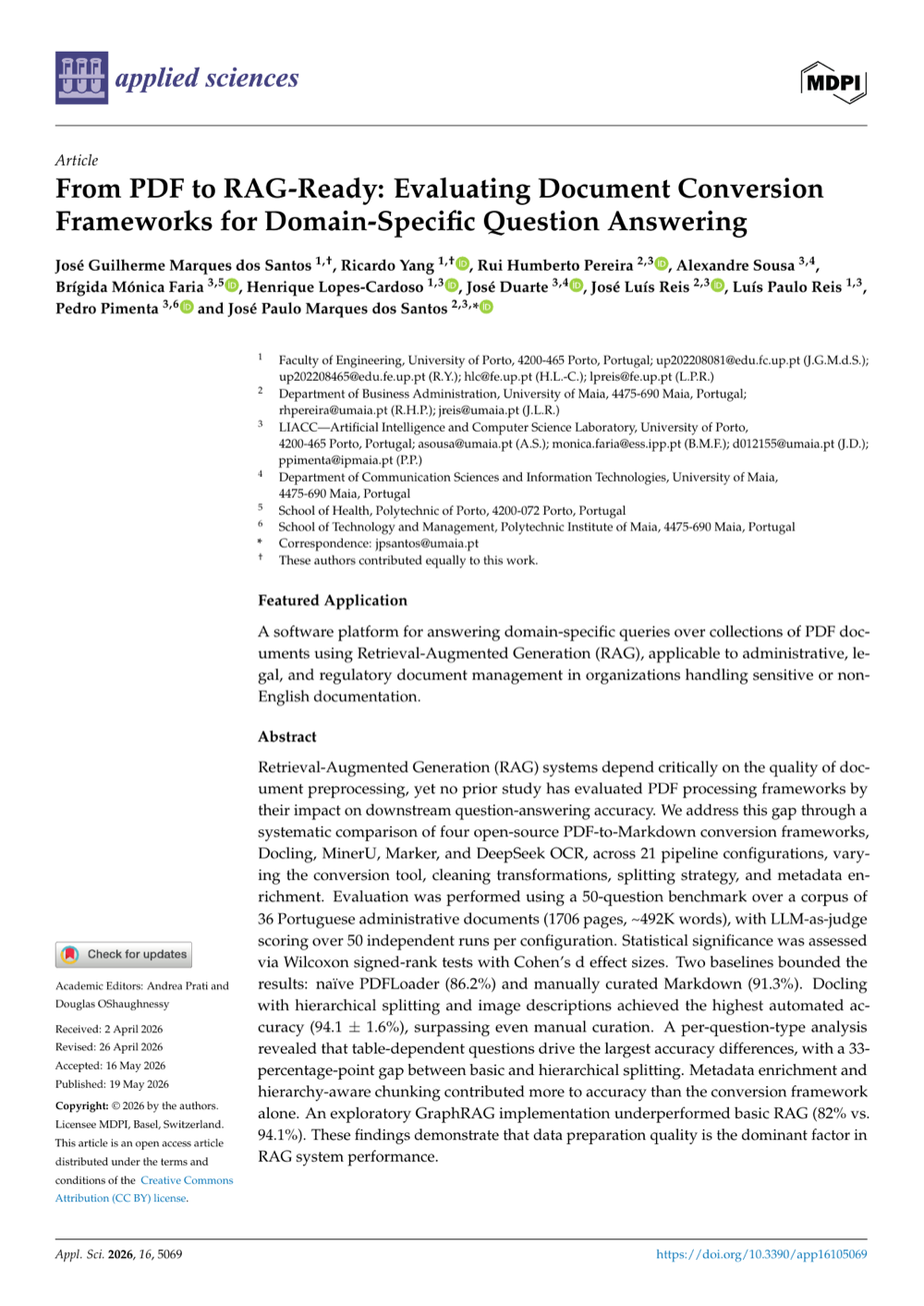
The study was about RAG, the setup that lets an AI answer questions from a pile of your own documents. They took 36 real government PDFs, the ugly kind, full of merged-cell tables, form fields, and thousands of embedded images. Then they ran one clean experiment. They froze the AI model. Same model, same settings, every run. The only thing they changed was the prep: how the PDF got turned into clean, structured text before the model saw it.
Accuracy went from 79% to 94%.
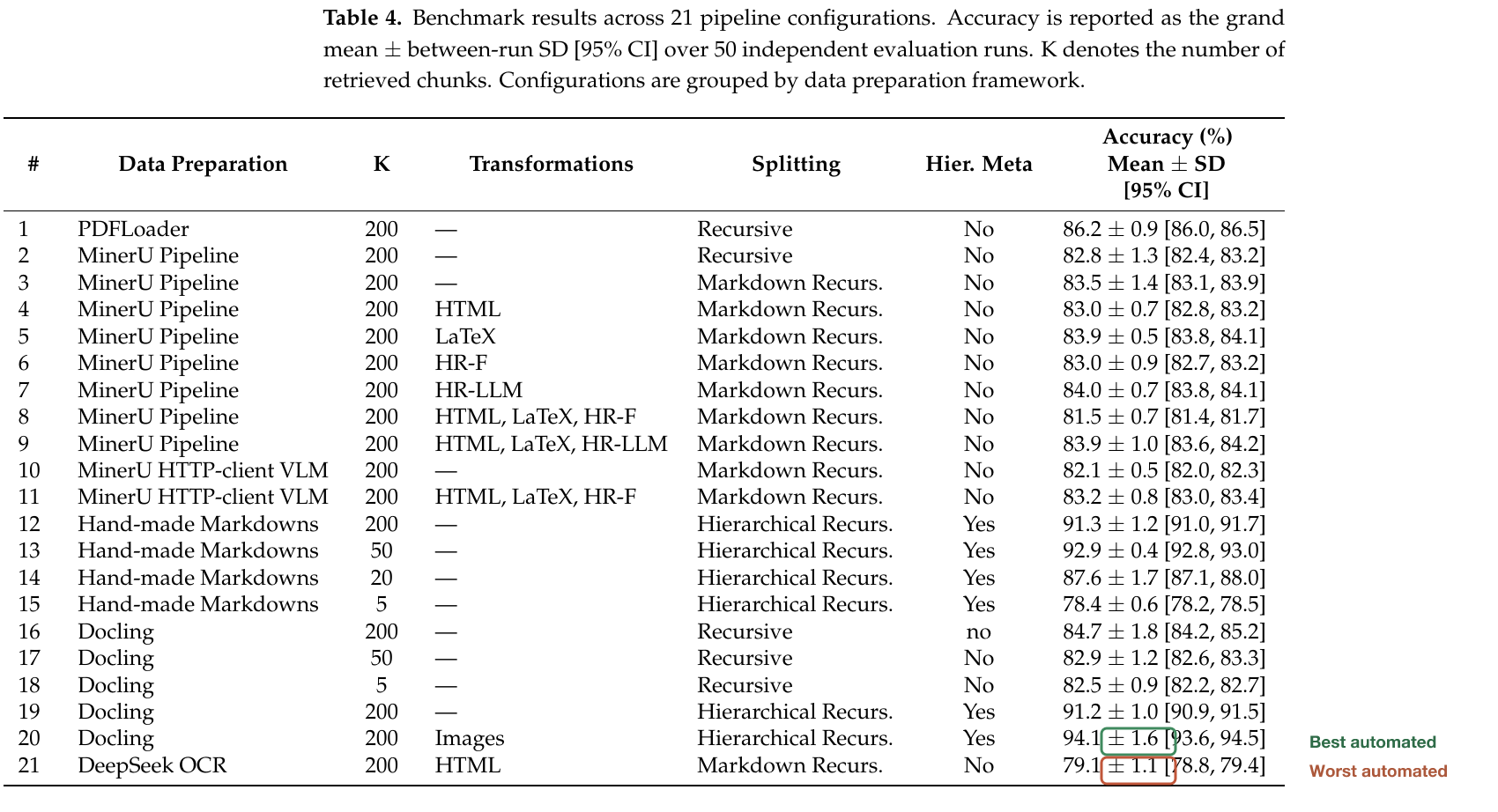
Same AI, same questions. Fifteen points of swing, all of it from the prep step nobody looks at.
Where did the gap come from? Mostly tables. On table questions, the worst setup got about two out of three right. The best got nearly all of them right. Same model, and the same converter, both times. The only difference was keeping the table’s shape intact instead of mashing it into one line.
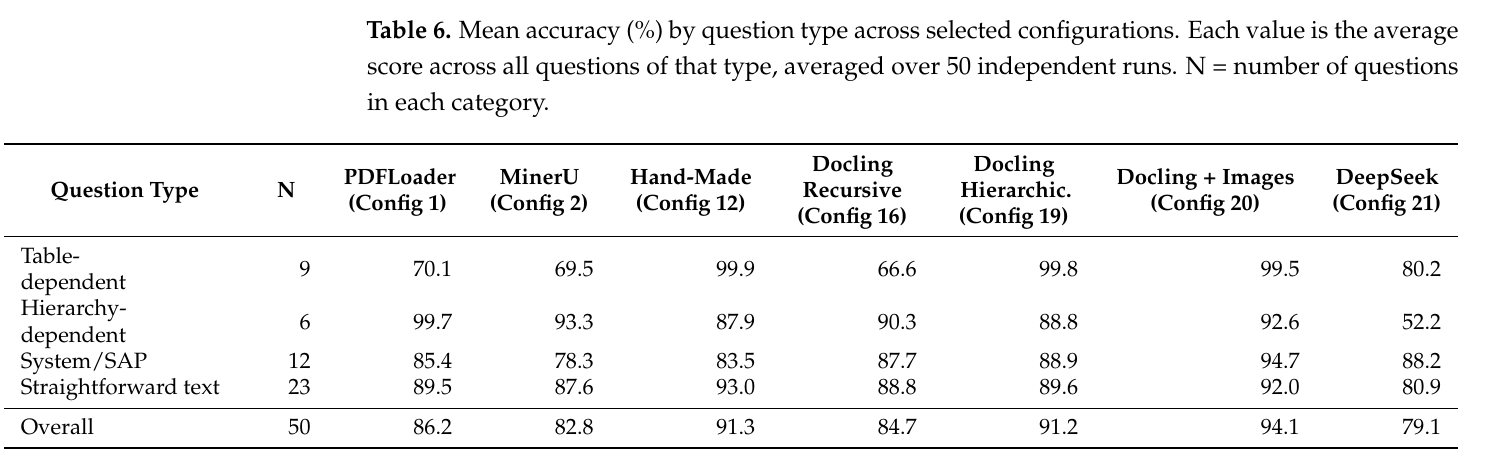
Two more findings worth knowing:
- The knowledge graph made it worse. They also bolted on a knowledge graph, the expensive machinery that’s supposed to make retrieval smarter. It scored worse than the plain setup. The boring lever, a clean conversion, beat it.
- Accented characters get corrupted. One tool kept misreading a letter with a cedilla, turning a real word into a non-word. Close enough to look right, different enough that a search never finds it. If you work in any language with accents, that one should worry you.
One aside that landed close to home: the researchers threw out one of the best converters on the market purely because it forced you to upload documents to its cloud. For government files, non-starter. Same instinct I keep hearing from users, different uniform.
So should you ever just paste the PDF in?
Sure. If the document isn’t sensitive and you’re only asking about it once, paste it and move on. The good models really are good now, and I’m not going to pretend otherwise.
Convert it first when one of these is true:
- It’s confidential and shouldn’t touch someone else’s server.
- You’ll ask about it a lot, and re-reading the whole thing on every question adds up.
- It’s structure-heavy (tables, formulas), which is exactly where a sloppy conversion does the most damage.
And whatever you convert with, check the parts that actually break before you trust the result. (It’s the same checklist I used to compare the popular converters.) Did the tables survive as real rows and columns? Did the formulas come through readable? Did the figures make it across at all? Thirty seconds of looking tells you whether the answer you’re about to get is built on the real document or on mush.
What I do about it
This is why pdfmarkdown.app exists. I build it, so weigh the pitch accordingly. The principle holds whoever’s converter you use.
It runs in the browser, on your own device. You’re on a website, but the PDF is converted locally and the file itself never gets uploaded, not to my server, not to anyone’s. It shows the original page and the converted Markdown side by side, so you can catch that silent table-shift with your own eyes before it ever reaches a model. Scanned pages get OCR, which is in beta right now, and when a page still comes out genuinely degraded, it tells you instead of handing back confident nonsense.
No tool can honestly promise a perfect conversion. That study’s own numbers show even the careful hand-made ones fall short. So I stopped trying to sell perfect, and started selling visible: a conversion you can inspect before you trust it, not a black box you only catch when the answer comes back wrong.
Common questions
Is it safe to upload PDFs to ChatGPT or Claude? For anything non-sensitive, it’s fine. For confidential documents (legal, medical, financial, unreleased work), treat any upload as leaving your control, and convert the file locally first so the original never goes to a third-party server. You can also redact sensitive lines from the Markdown before handing it to any model.
Does converting a PDF to Markdown actually save tokens? Yes, when you ask about the same document repeatedly. A PDF gets re-ingested in full on every query, which can run to a hundred thousand tokens for a single long paper. A clean Markdown version is smaller and searchable, so each follow-up question costs a fraction of that.
Which parts of a PDF break most during conversion? Tables, formulas, multi-column layouts, scanned pages, and figures. Plain running text usually survives. The University of Porto study found table-dependent questions drove the biggest accuracy gap, which is why those are the parts worth checking before you trust a conversion.
The short version
- Better models don’t retire the PDF problem. They move it somewhere the model can’t reach: documents you’re not allowed to upload, and documents too long to re-read on every question.
- A University of Porto study froze the AI and changed only how the PDF was prepared. Accuracy went from 79% to 94%. On table questions, from about two-thirds right to nearly perfect.
- The fancy add-on, a knowledge graph, made it worse. The clean conversion won.
- Convert sensitive or high-traffic PDFs once, locally, into clean Markdown. Confirm the tables and formulas survived. Then every model you hand it to reads the real thing.
My friend’s question was fair. Models will keep getting better at reading PDFs. The reason I convert mine more, not less, is that the two things actually holding people back, privacy and cost, don’t shrink as the models get smarter. If anything, they get sharper.